Topdressing is not a new practice for golf courses and athletic field turf. Lawn turf is often a similar turf, usually bermuda or zoysia. Sand has been the standard topdressing material for decades and it backed by decades of research and application by the leading turfgrass professionals. Sand spreads evenly over the turf to provide a level surface for an even cut by the mower, preventing scalping. Sand is also an inert material, meaning that it will stay within the soil creating pore space for infiltration of air and water. Sand along with core aerating reduces compaction of high clay content soils. Sand also helps alleviate excessive thatch build up. A heathy turf already has beneficial microbes within the soil, but excessive thatch or shallow roots can lead to the loss of turfgrass health. RSI has a variety of topdressing sands for different applications and turf types. Our topdressing may be dyed green or blended with compost if preferred.
You can use the same sand for both but they are not the same. Topdressing sand is designed more for the purpose of topdressing turf and the gradation is composed of medium sized particles. The same sand is not optimal for bunkers as it can become unstable and lead to fried egg lies or buried balls (low penetrometer readings). However, your bunker sand should not contain particles that if hit onto the green cause damage (large particles). Bunker sand is designed with more uniform gradation and angular particle shapes.
How to topdress your own lawn…in 8 easy steps (ok it does require some physical activity)
So you have heard the benefits of topdressing your turfgrass already, and in your boredom at work you are researching the plan to topdress your lawn this weekend. Obviously you could pay a professional but you would rather save some money and get a little exercise while making your lawn look great. Here is the basics to topdress your lawn yourself:
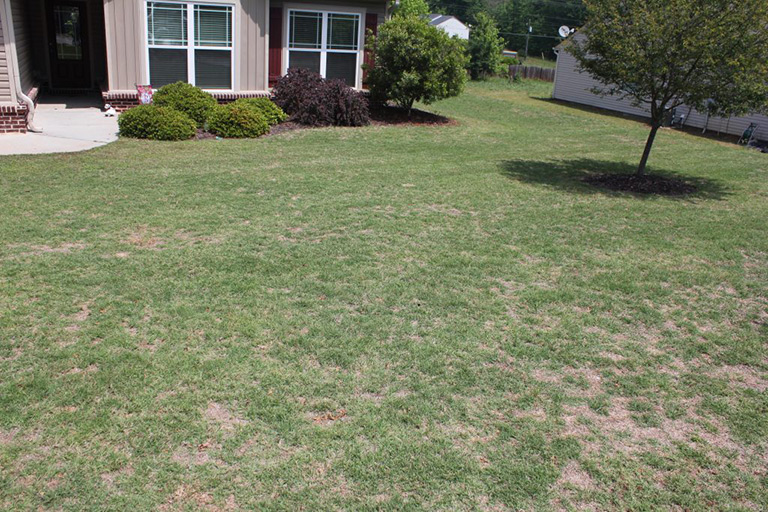
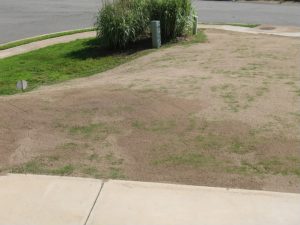
Most importantly this IS ONLY about topdressing warm season turfgrasses such as any type of bermuda, zoysia, centipede, st. augustine, and a few more. This is NOT for fescue (unless you want to kill it, which is perfectly fine but round-up is easier). Almost all subdivisions in North Georgia and Atlanta are sodded with bermuda by the contractor (on the worst red clay they can find). If you have this type of grass then let’s go. Typical bermuda in poor health on clay soils.
Make certain that the grass is green. Most warm season turfs green up in May or June in the South. Let the grass come out of dormancy (when it’s brown) for at least a few days or couple of weeks. You can topdress into July and August but not past that as it will not recover before the fall.
Get your supplies. You will need to schedule a delivery of topdressing sand (it will fit in the driveway or along the curb). A rule of thumb is order about a ton of sand per 1,000 square feet of lawn (not more than 2 tons per 1,000 sqft.) You will need shovel(s), wheel barrow or topdresser, a loader or tractor with loader is optional, small rake and a landscaping rake (or shop broom -the wide one). If you have a larger area, a drag will help too. A drag can be an infield rake (like the thing they drag around at the Braves’ game), but a simpler version is an old chain link fence gate or just fence weighted with 2×4 lumber (be creative because all you are doing it dragging it around to level up the sand).
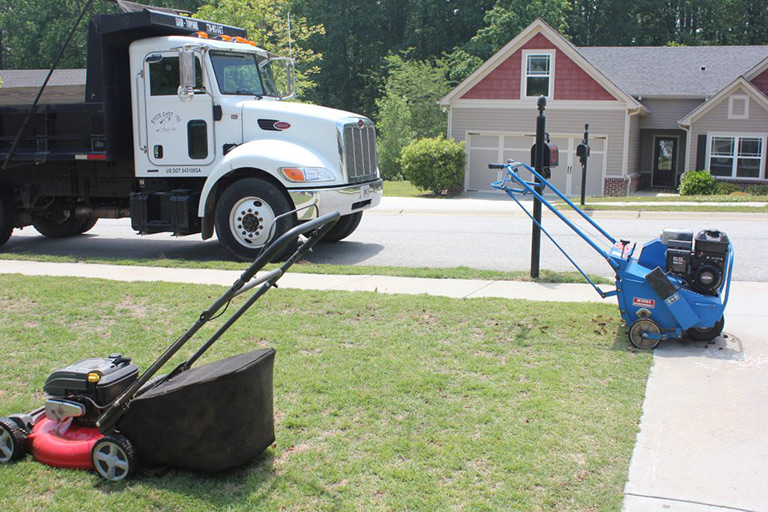
Mower, core aerator, and topdressing sand are all ready!
Scalp the grass with the mower. Cut it on the lowest setting on the mower without the mower hitting the ground. This may take a couple of trips around depending on the initial turf height and mower.
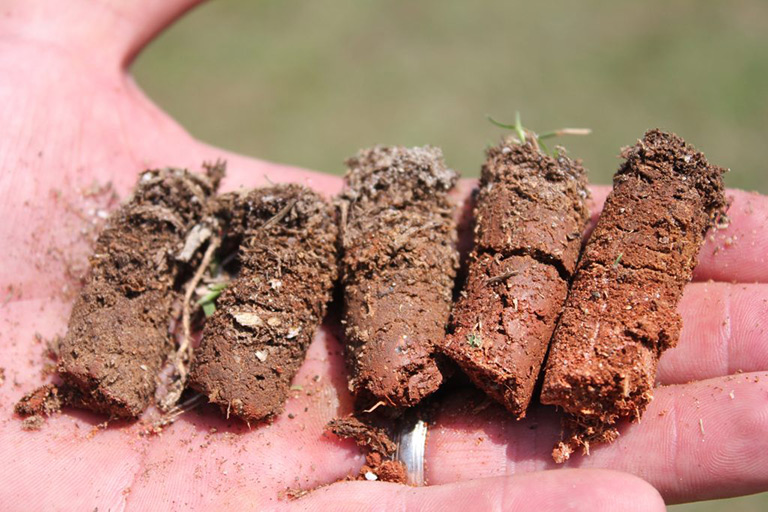
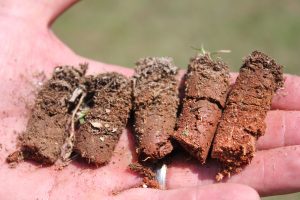
Core aerate the lawn. Core aeration increases the effectiveness of topdressing. A core aerator is the type that has hollow tines and throws out a plug (looks like goose poop). You can usually rent these at hardware stores, rental stores, or buy a cheap one that you pull with your mower. There are so many types. Don’t worry just do it – you aren’t going to hurt the grass. Just look out for the sprinkler heads, tree roots, and buried phone lines (which should be deeper than a few inches anyway).
Red clay plugs and thatch are replaced with sand to help aeration and infiltration.
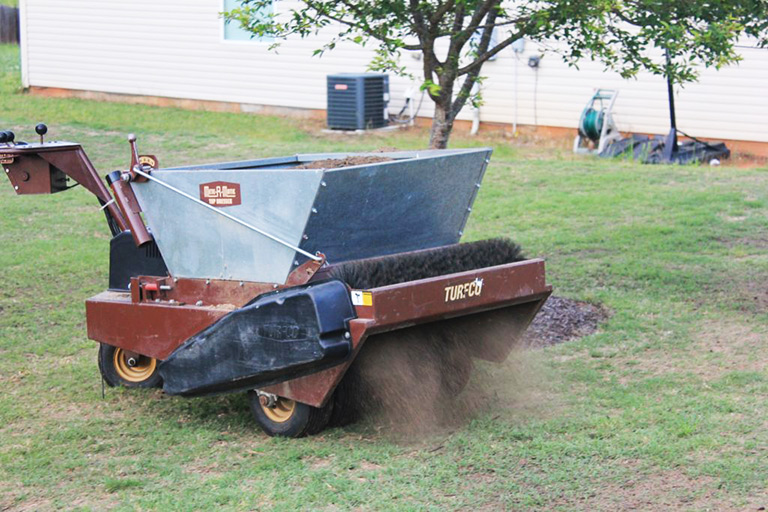
Spread some topdressing sand. Read this if you need to know what kind and why you should spread sand instead of soil or compost. You can be fancy and rent an actual topdressing machine (from Keystone Rental, http://www.keystonetoolrental.com) along with a mini loader. However, I suggest breaking out the ol’ shovel and wheel barrow. You can just sling the sand evenly over the grass with the shovel or dump it in small piles and spread with the landscaping rake. A drag (see above) behind a lawn mower works great for larger areas. Either way you need a long flat surface to help level up the ground with the sand and break up the core plugs. The idea is to add about a ¼ inch of sand and work it evenly. It will fall into the holes. Keep in mind you may have some small areas/holes that need more sand to level it up. Using a small topdresser or a shovel works great to spread the sand.
It is optional but a little fertilizer is great to add to help the turf recover. A fertilizer with a high amount of nitrogen (that is the first number on the analysis) helps the leaves grow back quick.
Water that lawn or ask God to do it with some rain. This allows the sand to melt in and the grass to recover quickly.
Now you know that your neighbors will be jealous once your lawn looks awesome, so this is your warning that you better be ready to tell them who to call or you may be doing it again next door. Seriously, just get them to split the cost of the load of sand delivered with you so you can have help and save money to start with. This is work but have a good time and enjoy your time outside!
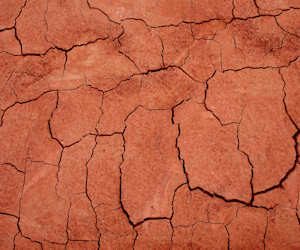
If you live here in Georgia and tried to grow any type of plant, then you know about our notorious Georgia red clay (dun-dun-duhhhh).
Georgia Red Clay
It is beautiful but too often the contractor grades out your home and at the same time strips the topsoil, leaving only the poor sub soil behind. Don’t worry, it was left totally compacted too by the time the house was completed. Last but not least your poor sod gets thrown on top of the nutrient and organic matter deficient, compacted dirt. Good luck trying to keep your lawn healthy. It will take more water, nutrients, herbicides, pesticides, and more to keep it looking up to par.
If by chance you actually do have good soil beneath your turf, keep reading because topdressing will maintain the healthy lifestyle of your turf. After all, good soil conditions are like similar to living a balanced lifestyle ourselves. When you have the proper nutrition, water, and exercise then you will look and feel better and have less weeds in your life. It’s more work to get poor soil back into shape than to start with it from the beginning but topdressing can help in either situation.
Just like other plants your lawn turfgrass needs light, air, and water. A deep healthy rootzone helps the plant thrive even through stressful conditions, such as a drought or extreme temperatures.
Healthy roots lead to great looks
Unfortunately, compacted soils with a high clay content (the typical stuff around here) make it difficult for roots to penetrate deep into the soil (which lacks nutrients and water anyway). You can take a sample by cutting out a small patch with a shovel or knife. If you notice the roots are less than a few inches we need to to help them out. The compacted clay also prevents air and water from infiltrating into the soil so only the top portion of the soil gets any moisture before the excess water just runs off the lawn.
The second issue that plagues turfgrass, especially healthy lawns, is thatch build up. Thatch is basically decomposing organic matter developed by old stolons and rhizomes from turf growth. It’s important to note that grass clippings do not contribute to thatch, so don’t worry about that. Thatch collects between the leaves (green part) and the roots, so you really don’t see it without digging down to look at a sample of turf. Too much thatch actually prevents water and air from getting through and down to the roots.
Red clay soils beneath thatch build up.
Soooo, two things prevent water (along with nutrients) and air getting deep into the soil where it can last for days to continue to last between rainfall (or irrigation events). Those two things are compacted clay soils and thatch. The solution is to core aerate and topdress.
Core aeration pulls plugs of dirt and thatch out of the profile and leaves them up on top. Topdressing with sand [why use sand? read this] provides an amendment that reduces compaction and allows water and air to go deep into the soil. Dragging the plugs back into the turf while you drag the sand is fine. The additional air getting to the rootzone will help the excess thatch decompose properly as well. Dethatching is another process that may be required if thatch is too excessive.
Topdressing yields great results!
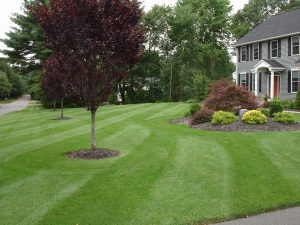
As you may already know, you should only cut your grass no more than a third of its height at a time. Often you break this rule when your lawn is not level and has humps or holes. When the mower goes over these rough areas it scalps (cuts the grass too low) the grass and leaves only the tan/brown stems with no green leaves. It looks terrible and is not good for the turf health either. Topdressing in these areas smooths it up so that you are left with an even cut every time and sweet green grass. You know the kind you look out the window and say wow look at my lawn!
If you are ready to get started or have questions please feel free to contact River Sand, Inc. for help.
The green grass dream!
The goal of any golf course, especially the putting green, is a slick, playable surface that can be maintained for years without a major course overhaul. To obtain this ideal, it’s important to build the course properly and pay special attention to the construction of the rootzone (soil). The USGA has tested and recommended a certain topdressing mixture that will ensure top-notch golf course greens that, properly maintained, will provide golfers with the type of course they expect.
Golf is best played on sandy, infertile soil. This is because the grass needs to be low and fast and a high amount of turf growth on fertile soil will not provide ideal playing conditions. The best results for the greens will be obtained by using a mixture that is at least 60% medium and coarse sand. This is the USGA recommendation for good reason because this mixture will ensure a good balance of particles used for drainage after a heavy rain, and proper moisture control to avoid dehydrating the soil.
If the sand particles are too coarse (such as gravel), you run the risk of drying out the soil. Similarly, very fine particles like those found in clay and silt should also be minimized to reduce the risk of clogging the space needed for proper rootzone growth. However, these should not be avoided entirely because the fine particles in clay particularly provide certain nutrient-holding capabilities that are positive for the health of the grass.
You’ll also want to avoid organic matter within the mixture. The point of topdressing is to remove excessive amounts of organic matter from the layer on the surface of the soil known as thatch. It doesn’t make much sense to use something composed of organic matter to remove an excess of organic matter. Today’s mixtures contain mostly sand, along with other inorganic additives like volcanic rock, and diatomaceous earth. The type of sand mixture you use is dependent on the type of grass you’re trying to cultivate, what the existing soil is composed of, and especially the climate as certain mixtures will do better in, say, a cooler climate.
The key to a great golf course is a beautiful, sweeping lawn. This is achieved through proper cultivation and maintenance. Using the appropriate topdress is essential to this process. RSI provides topdressing mixtures that meet all of the USGA standards that have been thoroughly researched and proven effective to provide the type of course expected by today’s competitive golfers.
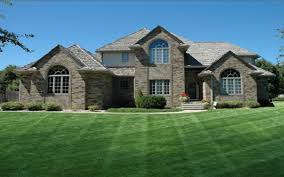
You take pride in your home and one of the first things anyone sees of it is your lawn. Green, lush and fertile should be your first goal. It’s the envy of the entire neighborhood. Your secret? Topdressing. For new homeowners out there who want to get in on the action, I’m going to explain the power that topdressing can give them.
What is topdressing?
Topdressing is a process in which you spread a new layer of soil on your lawn to improve its overall health.
How will topdressing help my lawn?
Thatch is a layer of organic material located above the surface of the soil. Topdressing is applied to minimize excessive thatch accumulation and the associated problems.
Topdressing promotes healthier roots by allowing air and water to reach them easier. The result of topdressing is a new and fresh lawn, void of those dead, brown patches, overgrown areas and weed spurts. Topdressing helps create healthy, consistent lawn growth.
Topdressing materials
There are several materials to topdress your lawn. The majority of professionals use a quality natural sand. Some prefer a mixture of ingredients including sand and peat, sand and loam (type of topsoil), or sand and compost. The sand/compost mixture often adds sand for improvement of soil properties, and compost adds value as organic matter to the soil. The safest measure is to find a topdressing material mixed specifically with lawns in mind from a professional supplier.
Applying topdressing
Applying topdressing to your lawn is simple if you remember a few key things. First, the topdressing needs to penetrate the lawn’s surface, which is easier if the lawn is mowed very low for bermuda grass lawns.
If the soil is compacted, it may be necessary to core aerate the soil first using a lawn aerator to remove plugs about two inches deep. This is commonly seen on golf courses and areas with extremely firm soils.
After the aerating process, spread the topdressing evenly over the entire lawn using either a topdresser, spade, or spin spreader that evens out the application.
Lastly, go back over the lawn and make sure that the mixture has gone into the soil and isn’t just lying on top using a drag or other method. It’s crucial that the topdressing penetrates into the soil and is spread evenly to create a level surface. The level surface will help prevent future scalping with the mower.
We sell the best topdressing on the market!
Riversand Inc. is your local expert on lawn topdressing. We’ve got everything you need to keep your lawn looking its best all year long. Give us a call today at 877.499.7263 or visit us online at www.riversandinc.com.
These fall lawn care tips will save your landscaping from the coming harsh winter.
The year is winding down, the weather is gorgeous, and you think you’re done with landscaping for the year … but you’re not! Fall is the right time to get your yard prepared for the harsh winter. Follow these easy fall lawn care tips to ensure your lawn lasts the winter and brings you a beautiful spring!
The fall months are essentially the winterizing months for your lawn. They are preparation months and require more unique work than during the spring and summer. But if you want to be the envy of all the neighbors, and have that lawn that’s ready to emerge from the winter, take the time now to do it properly.
Remove dead leaves from your landscaping
Grass is a plant, and as such, it needs sunlight to grow and flourish. Fall includes leaves falling, so it’s easy to see how one affects the other. Have you ever seen a lush green field in the middle of the woods? No? There is a reason for that. So rake the leaves and let your grass breathe and bask in the of the last warm days of the year.
Aerate your lawn
Aerating is an important process in lawn care. By poking holes in your yard with a quality lawn aerator, you ensure that sunlight, water, and air penetrate below the surface and nourish the root system. The results are healthy blades of grass with robust stems ready to withstand the cold. Also, topdressing is a good idea at this time to control the accumulation of organic matter leading to excessive thatch and unhealthy growth.
Plant new grass seed
Beef up your lawn by reseeding it before it gets too chilly. This is a great time to provide support to the lawn system by adding new seedlings to the lawn. It also helps to fill in the bare spots that a summer drought may have left or that aeration made room for.
Fertilize
How else will seedlings get their start? Fertilizer is essential for growth. Be sure to check out your local nursery for fertilizer that’s specially made for winter protection and your specific climate conditions.
Mow low
The last mow of the season is different from other mows in that you will want to cut the grass a bit lower. In the summer, it’s better to keep the grass higher off the ground and allow it to maintain constant, sustained growth. This ensures proper weed control and keeps the grass stems robust and hearty. But as winter sets in, it’s better to cut a bit closer to the ground to protect grass from the cold and to keep it from being overexposed
Need help with fall landscaping?
Riversand Inc. is your local expert on winterizing your lawn. We’ve got everything you need to keep your lawn looking its best all year long. Give us a call today at 877.499.7263 or visit us online at www.riversandinc.com.